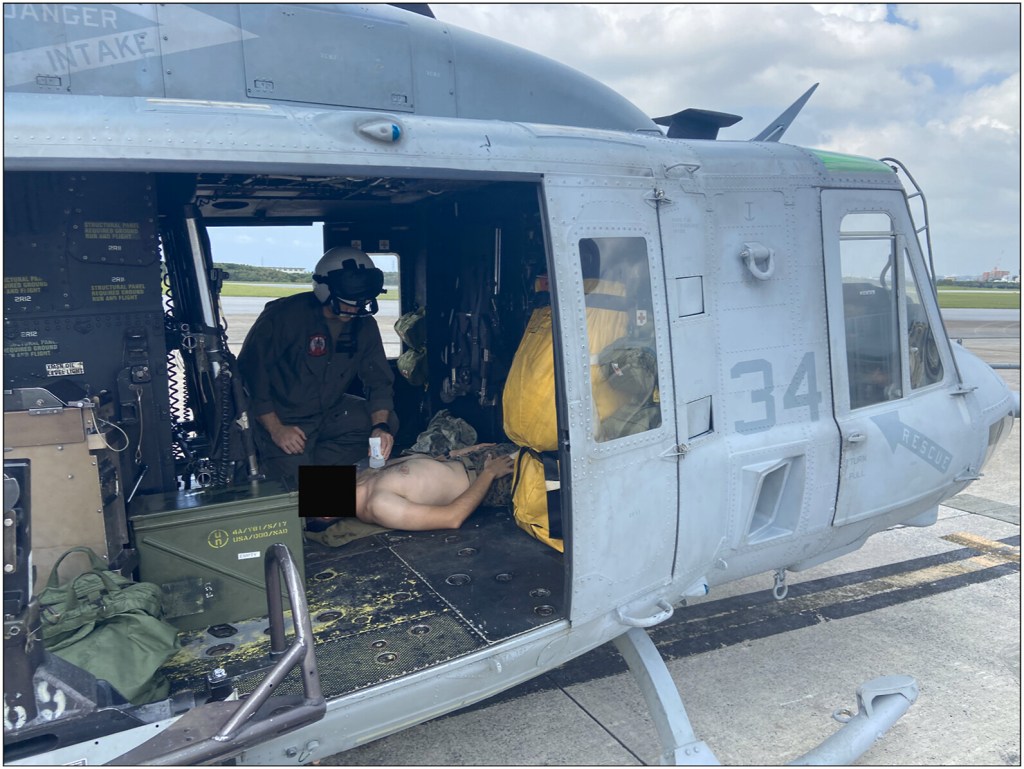
Unique and novel applications of existing technology has the ability to enhance the ability to deliver care in deployed, operational, and austere environments. There has a fair amount of opinion pieces in the scientific literature about the ability for Artificial Intelligence (AI) to enhance casualty care12.
We certainly agree there are many applications for AI in deployed settings for medical care, though there are currently exceptionally limited examples of this currently in use. There are a variety of other technologies currently available which may have tremendous value in deployed settings, which potentially have a more immediate and direct impact on care.
While not fully exhaustive list, telemedicine, augmented reality, and patient monitors/sensor may have a strong impact on medical care in these settings. The fact the the technology currently exists for all of these but is not applied in the deployed realm, has the potential for these to be low risk/high reward for development.
Telemedicine has been used in various formats for many years. Current case reports and studies have focused generally on synchronous video communication for procedural assistance34. Having expert help synchronous is extremely helpful (e.g., when a general surgeon needs to perform a cesarean delivery), though telemedicine potentially could expand well beyond this. When combined with sensors and AI (see below), experts could monitor data streams from casualties offsite and provide expert opinion. This could involve so-called standard monitors (Blood Pressure, EKG, Pulse Oximetry, etc), but could also involve novel sensors with advanced algorithms. The potential for central monitoring could enhance medical resupply (including blood banking) to optimize resources and maximize beneficence in a resource constrained environment5.
Augmented reality can take a variety of different forms, though enhancements in “smart glasses” have decreased the form factor, increased battery life, increased screen resolution, and camera miniaturization, has dramatically increased the usefulness of these devices. The smart glasses can be used for synchronous video communication with telemedicine discussed above, but this is just the beginning of potential uses. Because the smart glasses can display images on the screen, they can “augment” the information presented to the individual using them. Like a “Heads-Up Display” (HUD) in tactical aircraft, the additional information presented can be very helpful in time-critical decision making. In the healthcare setting, this could be vital signs, labs, imaging, etc67. This could be a helpful tool extending physician capability and capacity in the operational setting.
Advanced patient monitor or sensors may similarly augment care capability and capacity in resource limited, austere, and operational military environments. Newer sensors that are lightweight, low cost, and have a low energy requirement (allowing for long term battery operation) are available for use in a variety of settings8. When matched with AI-based algorithms (or even traditional regression based algorithms), these monitors can predict or demonstrate changing physiologic conditions. Larger monitors such as flotrac or vigileo are clinically available for use, and have been for some time. The smaller (more field expedient) monitors with advanced algorithms9 are promising, though are not yet ready for clinical use. Future research could help develop these further for operational use.
Many additional areas of technology research may help enhance and mitigate challenges in deployed casualty care, particularly with the challenges of prolonged casualty care and critical care needs in distributed maritime operations10. High acuity patients with limited resources presents numerous challenges, though hopefully in the future we can leverage technology to augment resources to have the ultimate effect of fewer dead friends.
- https://doi.org/10.1093/milmed/usae359 ↩︎
- https://militaryhealth.bmj.com/content/early/2024/04/25/military-2024-002682.abstract ↩︎
- https://academic.oup.com/milmed/advance-article-pdf/doi/10.1093/milmed/usae094/57115329/usae094.pdf ↩︎
- https://militaryhealth.bmj.com/content/170/2/146.abstract ↩︎
- https://academic.oup.com/milmed/advance-article/doi/10.1093/milmed/usae307/7693829 ↩︎
- https://militaryhealth.bmj.com/content/170/3/223.abstract ↩︎
- https://journals.sagepub.com/doi/full/10.1016/j.wem.2023.01.008 ↩︎
- https://www.mdpi.com/1424-8220/22/2/442/pdf ↩︎
- https://academic.oup.com/milmed/article/187/5-6/e630/6146890 ↩︎

 Scalpels & Strategy
Leave a comment