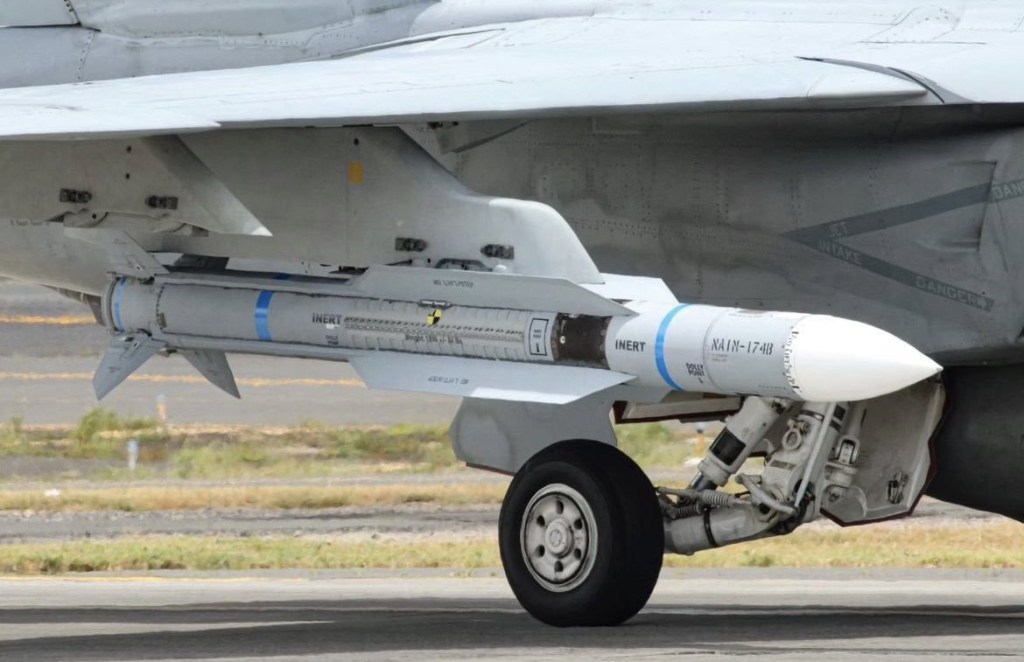
(U) Air-to-air capabilities of U.S. Navy just went from 93 miles to 250 miles, now outmatching the 155 miles sported by the Chinese PL-15 long-range air-to-air option.
(U) The AIM-174B is compatible with U.S. and Australia platforms.
(U//PNDG) Lockheed’s AIM-260– extremely long-range air-to-air missile small enough for stealth aircraft to carry internally— …loading.
(U//STRATSPLAIN) The ability to fly is integral to the U.S. contemporary continuum of trauma care; ready access to the skies is medicine’s “critical vulnerability”, if you will. This is amplified in a region made up almost entirely of water. If we are unable to fly (aerial denial or aerial parity), patients are stuck at their farthest Role of Care achieved, wherever air was turned off. In the Pacific, hopefully that means they made it to the Role 2 but then a new problem set arises. Even if surface is uncontested (*if*), most of these distances far exceed current ERC capabilities except for the most stable patients. If the bottle neck is the Role 2, then patients will build up there, greatly taxing a system meant for just a few days of trauma/critical care.
So, tech advantages — however short lived — may change patient care dramatically.
(U//JPJ/WWJPJD) We talk medicine a lot, but “It is by no means enough that a [surgeon] in the Navy should be a capable [cutter], he must be that of course, but also a great deal more….”
~JPJ (sort of)… Do No Harm = Do Know Harm

 Scalpels & Strategy
Leave a comment