Viscoelastic testing with either thromboelastography (TEG) or rotational thromboelastometry (ROTEM) has been used in critically ill patients to help better assess coagulation and coagulopathy. A description can be found here and is an excellent guide for those who don’t regularly use TEG or ROTEM.
The Joint Trauma System CPG on Damage Control Resuscitation recommends the use of TEG or ROTEM during DCS, though this is almost never available in deployed settings. It was available in Afghanistan at the Role 3 hospitals Craig Joint Theater Hospital in Bagram and the NATO Multinational Medical Unit at Kandahar. Though its use in Role 2 facilities has been exceptionally limited.
Distributed Maritime Operations (DMOs) may change the way the doctrinal Role 1-4 facilities are used in future conflicts. Because of the so-called “tyranny of distance,” patients may need to spend more time at the Role 2 before being transported to the Role 3. This may change the necessary care delivered at the Role 2 (this will be explored in greater detail elsewhere, but reasonable to at least mention). Damage control surgery may now need to be more definitive surgery at the Role 2 if patients cannot be transported in a timely manner.
Unrelated to those challenges, there may be limited resources and intermittent resupply at the Role 2. Blood banking and other cold-stored logistics are particularly challenging at the Role 2. Whole Blood and other transfusion products are lifesaving and critically important during resuscitation. Massive Transfusions can save lives, but can also quickly eliminate blood supplies in even robust medical institutions.
The studies on TEG/ROTEM have focused on patient outcomes, primarily on survival, identification of coagulopathy, and treatment of coagulopathy. TEG or ROTEM at the Role 2 may have a separate benefit completely independent from individual patient outcomes. It is possible that viscoelastic testing helps most efficiently allocate blood products to the patients that need them most. If you are targeting transfusion in a goal-directed method with feedback from the viscoelastic testing, you can optimize both patient outcomes from trauma-induced coagulapathy, but also not over-utilize blood products by transfusing stable patients.
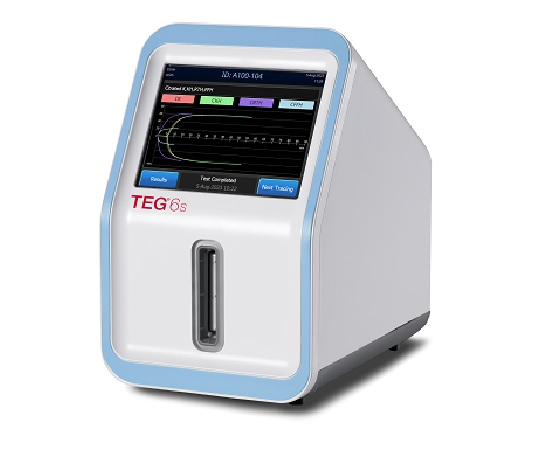
Several reasonable criticisms of TEG or ROTEM at the Role 2 exist. First of all, it’s another piece of expensive gear that needs to get transported and requires electricity. ROTEM is fairly sensitive to vibrations and has large footprint. This will not function well in a tent. The TEG 6s system is fairly self contained and runs off sealed cartridges. The proprietary cartridges contain the reagent, which is designed to be used “in convenient settings” (though, some settings are more convenient than others…).
Another reasonable criticism is which Role 2 is being used. U.S. Air Force Special Operations Surgical Team (SOST) is a very lean example of a Role 2, able to start treating patients within 15 minutes of arrival. Role 2 Light Maneuver facilities similarly have a small footprint and are not really designed for patient holding.
DMOs likely will see more robust Role 2 facilities, like the described Role 2 Enhanced, or the currently used Michaud Expeditionary Medical Facility in Djibouti are better examples of when viscoelastic testing may be beneficial in the Role 2.
This concept should be evaluated for feasibility of use at the Role 2. Its very possible the logistics challenges of having a TEG at the Role 2 are too great, but if not, the dual benefit of resource optimization and enhanced patient outcomes would be a huge step forward in DMO medical care.

 Scalpels & Strategy
Leave a comment